
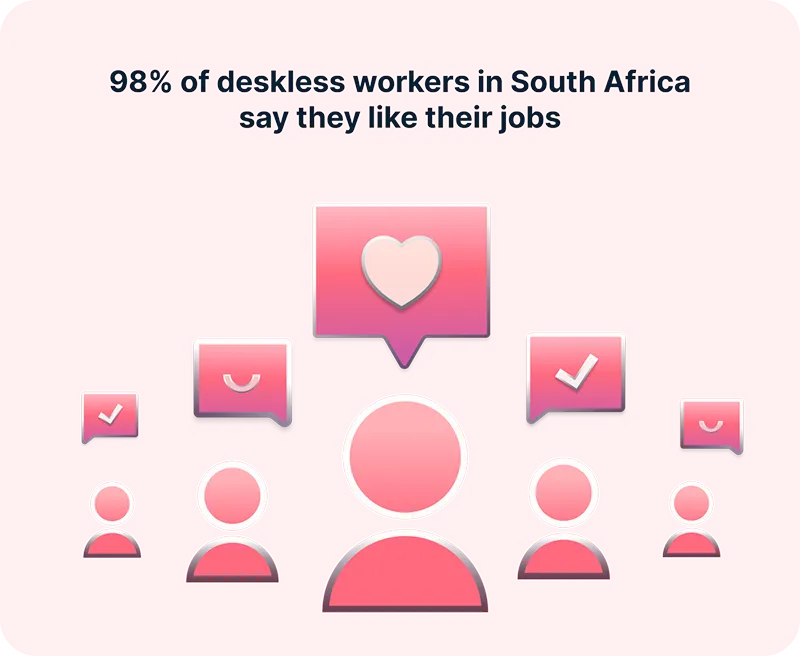
In South Africa, 98% of deskless workers say they like their jobs. They take pride in the work they do, whether that’s keeping our streets clean, our shelves stocked or our families safe. But only 49% of them feel recognised for it.
We know this because we interviewed nearly 2000 employees from some of the country’s medium and large employers of deskless workers in November 2024. You can find that research – the Deskless Worker Pulse – published here.
This gap in recognition isn’t just a missed opportunity for workforce morale. It’s a business risk.
Recognition has a measurable impact on performance. When employees feel seen and valued, they become more invested in their work. Gallup found that employees who receive regular recognition are five times more likely to be engaged and engagement, in turn, drives performance, retention and innovation.
For deskless workers, the link between recognition and motivation is especially strong. According to the Deskless Worker Pulse, feeling appreciated and having a path to growth are among the biggest motivators after wages. And when people believe they can grow, they give more. They think longer term. They show up with purpose.
This kind of engagement pays off. According to OC Tanner’s 2022 Culture Report, high-recognition cultures enjoy 23% greater profitability and significantly lower turnover. That’s not just good HR. It’s good business.
Despite their loyalty and resilience, many frontline workers operate in environments where praise is rare. A quarter of South Africa’s deskless workforce say they rarely receive recognition. That’s millions of people feeling invisible each day.
The result is disconnection. Engagement drops. Stress rises. According to the Deskless Pulse, poor communication from managers is one of the top stressors for frontline employees — nearly as impactful as transport and pay.
And the cost of disengagement is high. According to Gallup’s State of the Global Workplace report, lost productivity from disengaged employees costs the global economy approximately $8.8 trillion each year. In high-churn sectors like security, retail and cleaning in the context of South Africa, this cost hits especially hard.
Recognition is a lever. Pull it and things start to move.
Engaged employees aren’t just happier. They’re more productive, more present and more willing to go the extra mile.
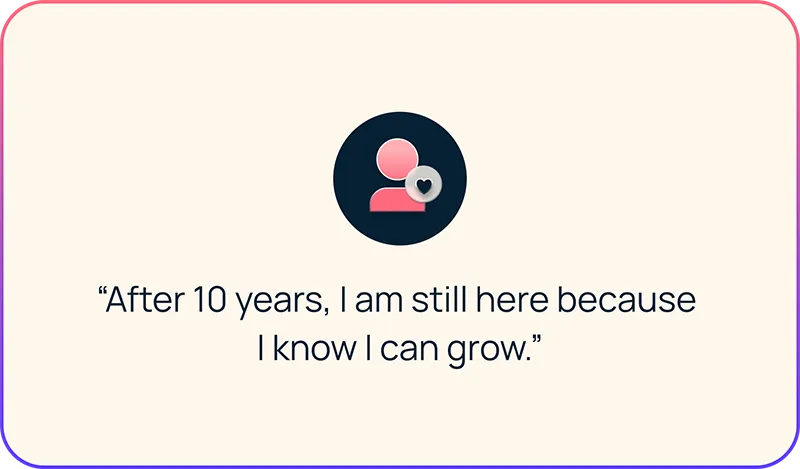
One employee explained that he had worked at his logistics company for a decade, where he had gone from a driver’s assistant to a stock controller at a major depot. “After 10 years, I am still here because I know I can grow.”
Another, working in waste management, said that “there is no shame in being a cleaner. Our work contributes to avoiding pollution.”
Two very different employees finding value in their jobs because they have room to grow and understand their worth – both outcomes of clear communication and recognition from their employer.
In a world where competition for talent is tight, and the cost of replacing a frontline employee can reach up to 40% of their annual salary, that kind of engagement is priceless.
The good news? Recognition doesn’t have to be expensive. It just has to be real.
Consistency matters more than ceremony. Timely praise from a manager, a WhatsApp message saying “thank you,” or a shout-out during a payday update. These are the moments that build connection, site by site, shift by shift.
And that’s where Jem comes in.
We make it easy for HR teams to recognise and engage their workforce at scale. By using WhatsApp, a platform installed on 95% of South African smartphones, we help teams deliver praise in real-time, to the people who need it most.
“Communicating clearly with your team one of the most powerful things we as employers and business owners can do,” says Caroline van der Merwe, co-founder and COO at Jem. “You have to have a reliable way to reach them and inform them. That’s why WhatsApp makes so much sense.”
No apps. No logins. Just meaningful, accessible communication that works.
Recognition shouldn’t be a quarterly initiative. It should be part of how your company shows up every day, wherever the work is happening.


Book a demo and walk through every module live, or see it on WhatsApp, on a real phone, in minutes.