
Think about the last security guard you walked past. Or the cleaner who mops the floors before your office opens. Or the barista preparing your coffee on your way into work.
These people make up some 72% of South Africa’s workforce. They’re people powering businesses, keeping us safe and holding the economy together.
Yet they’re often excluded from conversations about employee support and benefits.
How do employers begin to shift that reality? Let’s unpack.
Most employee benefit schemes and employee assistance programmes were designed for desk-based environments. They assume employees have email access, stable shifts and an HR department on standby.
That’s rarely true for a nightshift security officer, a cleaner or a depot worker. These employees often have irregular hours, no company devices and little to no access to digital HR tools.
Take something as simple as a leave application. An office employee might submit it through a self-service portal. A cashier at a fast food restaurant, by contrast, may need to complete a paper form, chase down signatures across sites and wait days for approval that may not even be granted.
The same goes for benefits like trauma counselling. Easily accessed via employee apps in office settings, but practically invisible to someone on the factory floor or behind the wheel of a delivery vehicle.
Offering a solid suite of benefits is only the first step. Making sure your workforce knows about them, and can access them, is what really matters.
Too often, deskless workers are left out of the loop. Updates are sent via email or company apps and portals – channels that don’t reach someone who isn’t sitting behind a computer.
“We had to type, print and send out a good 60 to 80 memos and make sure they eventually arrive on sites,” says Nicole Hart, HR and Payroll Manager at Prosec Guards. “Immediate, reliable communication was my biggest concern, 100%.”
Even when workers are aware, the process to access those benefits can be complicated.
An Employee Assistance Programme (EAP) might offer free counselling, but only if you can log in from a desktop or call during office hours. A funeral policy might exist, but if payslips and policy documents are delivered in formats that feel confusing or inaccessible, the benefit becomes meaningless.
This is where HR and Finance leaders need to ask tougher questions of themselves and their businesses. Not just “What benefits do we offer?” but “Would I know how to use them if I worked night shifts with no laptop or data?”
Improving access means simplifying how benefits are communicated, removing admin barriers and delivering support through channels workers actually use, like WhatsApp. Without this, even the best-intentioned benefits go unused and the impact is lost.
This isn’t just about fairness. It’s about wellbeing and business sustainability.
Frontline workers face more financial and emotional stress than their office-based peers. Jem’s 2024 Deskless Worker Pulse Report found that 72% of deskless workers are stressed about finances and 44% run out of money every single month.
Here’s why closing the benefits gap is so important:
1. Financial fragility: Many deskless workers earn under R15,000/month. Without savings, even a small emergency can trigger debt or missed shifts. 2. Precarious employment: Contract and shift work is common in industries like security, cleaning and facilities management. Irregular schedules create uncertainty, which amplifies stress. 3. Mental health pressure: Long hours, irregular schedules, public-facing roles and social isolation (depending on the deskless work in question) can all take a toll. One study highlighted widespread mental health risks among frontline workers during the pandemic [pmc.ncbi.nlm.nih.gov] but there’s little indication these risks have been addressed long-term. 4. High churn costs: It’s easy to see frontline workers as replaceable, especially in a country with high unemployment. But excessive turnover is expensive. Recruitment, onboarding and training take time and money. A study on South African companies found that voluntary turnover above 19% hits productivity and profitability hard [businessperspectives.org]
Some businesses are starting to move beyond the traditional model, rethinking how benefits should actually work for a mobile, offline, often-overlooked workforce.
That means meeting workers where they are – on mobile phones, using tools they already know. It means sending payslips, shift updates or leave approvals over WhatsApp, not email. It means offering wellness check-ins that don’t rely on in-person attendance, lots of data or advanced literacy in English. And crucially, it means tailoring benefits not just to seem equal, but to genuinely be equal.
Take Earned Wage Access (EWA) as an example. It lets employees access a portion of their earned pay mid-month, offering a lifeline in tough times. Jem’s research shows EWA isn’t a luxury, it’s a powerful lever for financial inclusion in South Africa (jemhr.com/deskless-pulse).
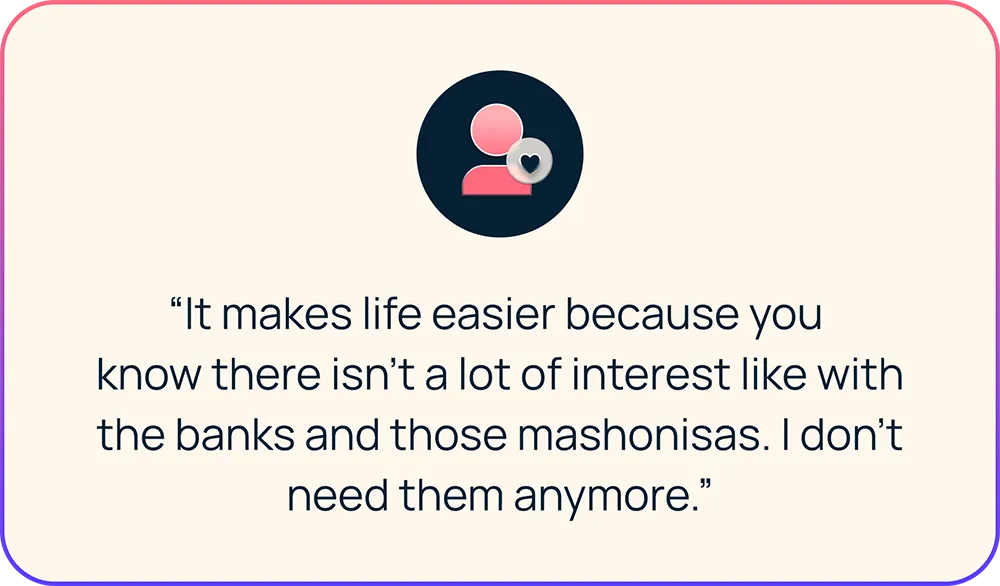
“We’ve got kids, sometimes you don’t have money for their lunch during the middle of the month,” says a Controlling Officer working for a security company in Cape Town. “It makes life easier because you know there isn’t a lot of interest like with the banks and those mashonisas. I don’t need them anymore.”
This shift from legacy systems to mobile-first, connected solutions is how companies build real dignity into frontline work.
South African companies face rising pressure. Economic headwinds, compliance demands and fierce competition for skilled people. But one thing stays constant: people do better work when they feel supported.
That includes your barista. Your cleaner. Your security officer.
Deskless workers don’t need watered-down versions of white-collar perks. They need benefits designed with their realities in mind. Benefits that are accessible, relevant and human.
Simon Ellis, Jem’s CEO, recently said in an interview on Times Live, “In 5 years, I want the security guard at the door to pull me aside and say: You’re from Jem, right? You helped me save R500 this month. We’re not here to play nice with industries that exploit the people we serve.”
At Jem, we’re not just digitising HR. We’re building a financial wellness and employee benefits platform that supports every employee, no matter where or how they work.


Book a demo and walk through every module live, or see it on WhatsApp, on a real phone, in minutes.